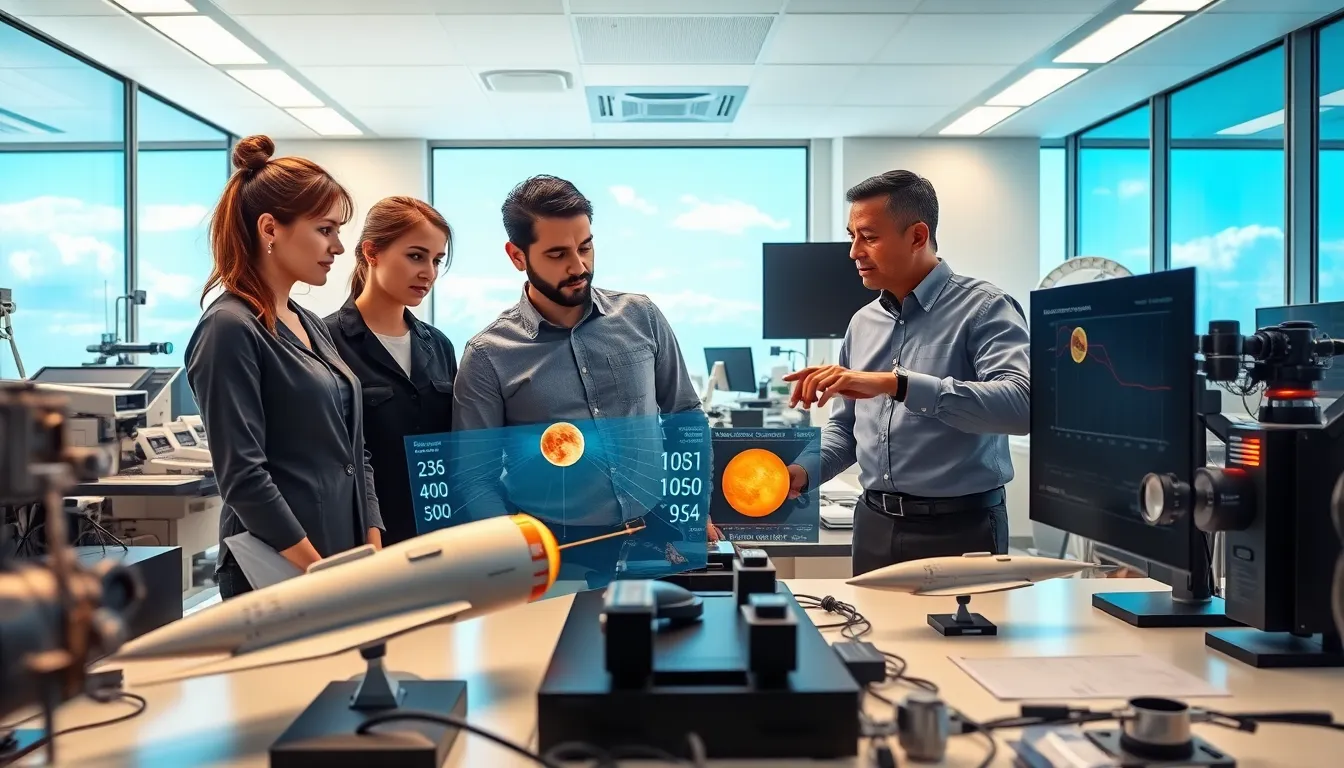
Ever looked up at the night sky and wondered just how fast we can zip around up there? Spoiler alert: it’s not as speedy as your morning coffee run. But, advancements in technology keep promising to shave some time off our cosmic commutes. This article dives into the current speeds of space travel, the marvelous physics behind them, and what the future might hold, all while trying to make you chuckle (or at least smile) along the way.
Understanding Space Travel Speeds
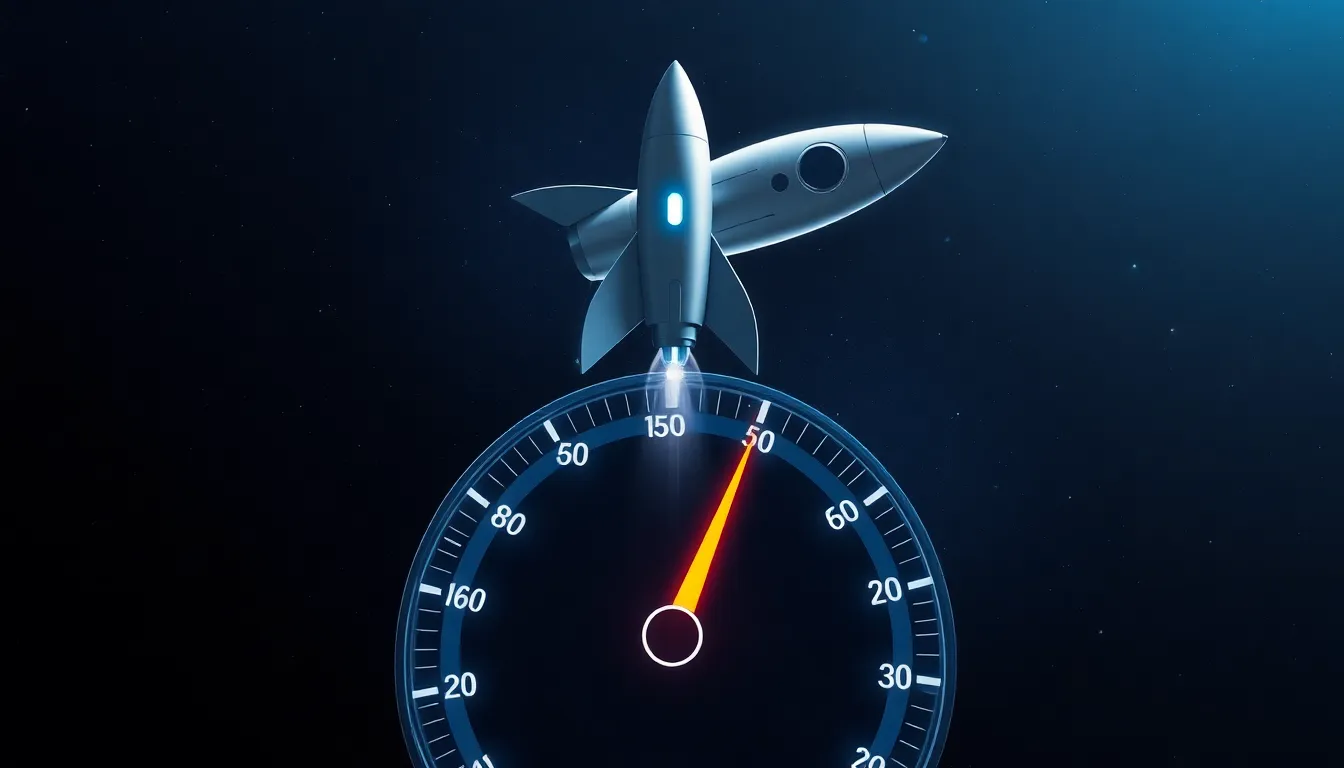
When it comes to space travel, speed is everything. The benchmark for ultimate cinematic speed, the famous speed of light, is a staggering 186,282 miles per second, or about 670,616,629 miles per hour. Alas, no spacecraft has even come close to this astronomical speed yet.
The Speed of Light and Its Implications
In theory, nothing can travel faster than light. This restriction is not just for show: it fundamentally changes how we think about space exploration. It doesn’t matter how high-tech our rocket thrusters become: reaching light speed appears to be a pipe dream. Even at a tiny fraction of this speed, the vastness of the universe means journeys to even the nearest stars could take decades, if not centuries.
Current Spacecraft Speeds
So, what does current technology bring to the table? Let’s take a closer look at the speeds of spacecraft today, and trust us, you’ll want to buckle up.
Advances in Rocket Technology
Modern rockets are quite the marvel. The Space Shuttle, which operated from 1981 until 2011, reached speeds of about 17,500 miles per hour, fast enough to break free from Earth’s gravitational grip. More recent endeavors, like SpaceX’s Falcon 9 and NASA’s Artemis program, are improving on this technology, pushing boundaries and testing new speeds.
Comparative Analysis of Spacecraft
If we take a look at some famous missions, New Horizons, which zoomed past Pluto in 2015, hit an impressive velocity of around 36,000 miles per hour. Meanwhile, Parker Solar Probe, our fearless little spacecraft aimed at the Sun, can reach speeds of nearly 430,000 miles per hour as it nears our stellar neighbor. Still, even these impressive speeds pale in comparison to light speed, reminding us there’s still much ground to cover. “
Challenges to High-Speed Travel
The road to snappier space travel isn’t all smooth sailing. High-speed travel presents unique challenges that scientists and engineers must navigate, ensuring that a cosmic road trip doesn’t end up a cosmic rollercoaster.
Effects of Speed on Human Physiology
Traveling at high speeds can have aggressive effects on the human body. Astronauts experience a phenomenon known as G-forces, which can lead to fainting or worse. Imagine trying to enjoy a snack in zero gravity while your body is being pushed against the seat with the force of a rollercoaster.
Spacecraft Design Limitations
Also, spacecraft must endure extreme conditions, such as radiation, heat, and, of course, the vacuum of space. Creating vehicles that can not only sustain high speeds but also protect human occupants is no small feat. Engineers are continuously researching materials and designs that can withstand the brutal environment of space while ensuring astronaut safety.
The Future of Space Travel Speeds
While we may not be zipping around the universe just yet, the future looks promising, if we can keep our feet on the ground and not let excitement lead to recklessness.
Concepts for Faster Space Travel
Hypothetical concepts in rocketry are gaining traction, with ideas like the Alcubierre Warp Drive or ion propulsion systems getting plenty of buzz. The Alcubierre Drive could theoretically contract spacetime in front of a spacecraft while expanding it behind, creating a sort of ‘warp bubble’ allowing for superfast travel. While it sounds like something straight out of Star Trek, it’s an area scientists are seriously investigating.
Interstellar Travel Possibilities
When we think about distance, interstellar travel becomes the ultimate goal. Scientists propose several schemes for reaching another star system. Theoretically, the proposed Project Starshot could send small, light sail spacecraft to Alpha Centauri, our closest star system, at about 15-20% the speed of light. Such speeds might allow for a journey of just a few decades rather than millennia.